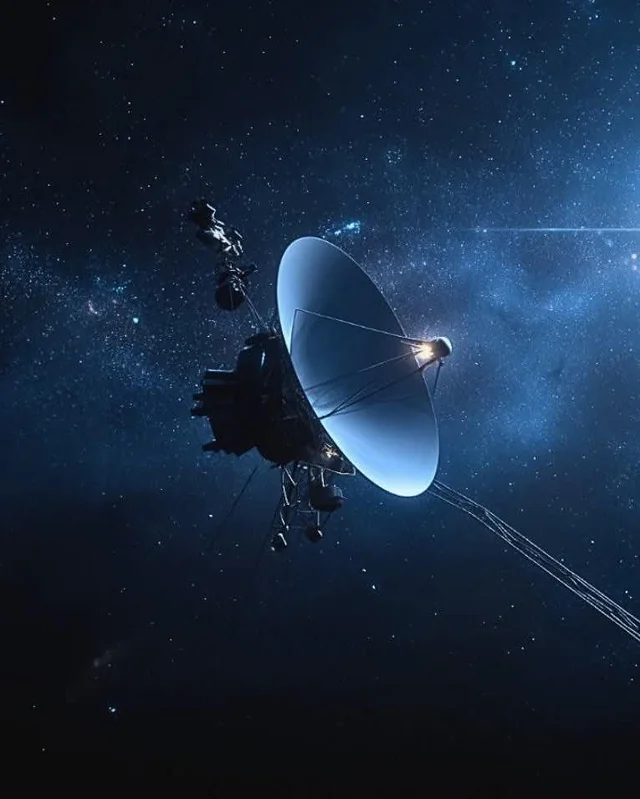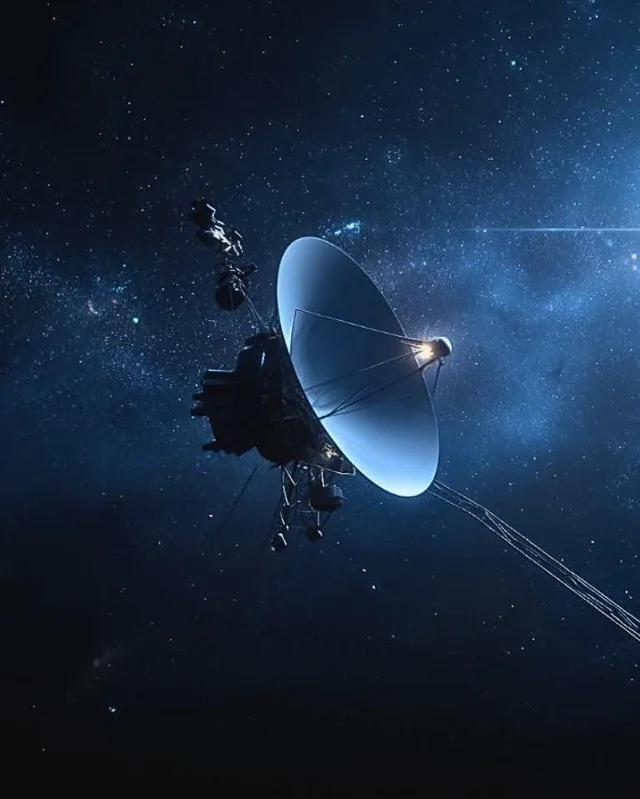
In the vast silence of interstellar space, a small probe launched in 1977 continues to defy expectations. On November 18, 2026, Voyager 1 will reach a staggering milestone: it will be exactly one light-day away from Earth. This means that a signal traveling at the speed of light will take a full 24 hours to reach the spacecraft from our home planet, and another 24 hours for us to hear its reply.
At a distance of approximately 16.1 billion miles (25.9 billion kilometers), Voyager 1 remains the most distant human-made object in existence. It has long since left the heliosphere, the protective bubble created by our Sun, and is now cruising through the space between the stars. Reaching the one light-day mark is more than just a round number; it is a testament to human engineering and our persistence to explore the unknown.
The Longevity of a Legend
When Voyager 1 launched nearly five decades ago, its primary mission was to explore Jupiter and Saturn. After completing those objectives through groundbreaking flybys, it transitioned to the Voyager Interstellar Mission. Since then, it has been collecting data on the environment outside our solar system, teaching scientists about cosmic rays and the magnetic fields of deep space.
Operating a spacecraft at such an extreme distance presents unique challenges. The power source (Radioisotope Thermoelectric Generators) is slowly decaying, forcing engineers at NASA's Jet Propulsion Laboratory to turn off non-essential instruments to keep the communication systems running. Despite these hurdles, Voyager 1 continues to beam back data, proving that it is perhaps the most resilient machine ever built.
Communication in Slow Motion
One of the most mind-bending aspects of the one light-day milestone is the communication delay. Currently, engineers already wait hours to see if a command has been successfully received. By November 2026, that wait time will be a fixed 48-hour round trip.
- Command sent: Day 1 at 9:00 AM
- Command received by Voyager: Day 2 at 9:00 AM
- Confirmation received on Earth: Day 3 at 9:00 AM
This delay turns every technical adjustment into a high-stakes exercise in patience. If an error occurs, it takes two full days to even begin a troubleshooting process. This reality underscores the incredible foresight required by the flight team to keep the mission healthy.
Why One Light-Day Matters
While space is often measured in astronomical units or light-years, the one light-day mark serves as a symbolic bridge. It helps us visualize the immense scale of our neighborhood in the galaxy. For perspective, the moon is just over one light-second away, and the Sun is about eight light-minutes away. Voyager 1 is pushing the boundaries of what we consider to be our "local" reach.
As the probe continues its journey at roughly 38,000 miles per hour, it will eventually go silent as its power runs out. However, its physical journey will continue for thousands of years. It carries the Golden Record, a message from humanity to any civilization that might find it in the distant future. Reaching a distance that takes light a full day to traverse is a humbling reminder of how far we have come since the beginning of the space age.
Looking Toward the Future
NASA continues to update the spacecraft’s software and hardware management to extend its life as long as possible. Fans of the mission can track the live distance and speed on the official NASA Voyager website. While the 2026 milestone is a moment for celebration, every single day that Voyager 1 stays in contact is a historic achievement in its own right. We are witnessing the final chapters of a mission that changed our understanding of the cosmos forever.