Martin Luther King Jr. Day (MLK Day) Countdown
Mon, January 18, 2027 at 12:00 AM CSTRepeats yearly
Details
- Country / Region
- United States
- Type
- Federal
Release information
The holiday is observed annually on the third Monday of January, placing the date between January 15 and January 21 each year in accordance with federal calendar rules.
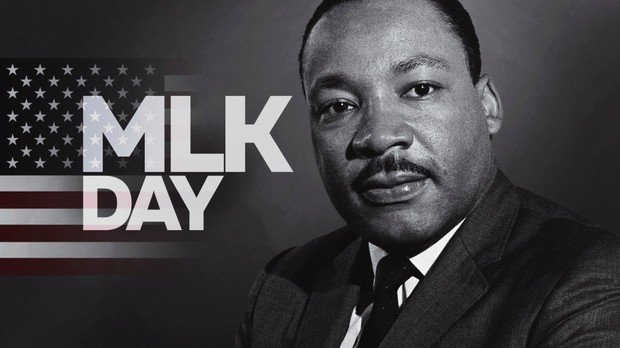
Martin Luther King Jr. Day honors the legacy of civil rights leader Dr. Martin Luther King Jr., who led nonviolent campaigns against racial discrimination and legal segregation. It serves as a national day of service, encouraging citizens across the country to participate in volunteer work, community improvement initiatives, and educational events.
Origin and Early Proposals
Martin Luther King Jr. Day honors the civil rights leader who spearheaded nonviolent campaigns against racial discrimination and legal segregation across the United States. Dr. King was born on January 15, 1929, in Atlanta, Georgia, and earned degrees in sociology, divinity, and systematic theology before entering Christian ministry. Throughout his leadership in the civil rights movement, he organized bus boycotts, sit-ins, freedom rides, and mass marches while advocating for peace and universal justice.
The effort to establish an official holiday began four days after Dr. King's assassination on April 4, 1968. Representative John Conyers of Michigan introduced the initial bill in the House of Representatives with approval from Coretta Scott King. Conyers persistently reintroduced the measure alongside the Congressional Black Caucus over subsequent legislative sessions. Early commemorative rituals began in Atlanta at Ebenezer Baptist Church, where Martin Luther King III placed a wreath at his father's grave.
Federal Passage and Opposition
Legislative progress moved slowly over fifteen years despite growing grassroots support across the country. In 1979, the House of Representatives brought a holiday bill to a vote on the fiftieth anniversary of Dr. King's birth, but the measure failed by five votes. Opponents, led by Representative Gene Taylor, raised concerns regarding the financial cost of an additional paid holiday and noted traditions that discouraged naming federal holidays after private citizens.
Public support intensified in the early 1980s, buoyed by a petition drive that gathered six million signatures and Stevie Wonder's 1980 tribute song Happy Birthday. Despite a Senate filibuster by Jesse Helms, Congress passed the holiday legislation, which President Ronald Reagan signed into law on November 2, 1983. President Reagan later created a commission in 1984 to assist with implementation, leading to the official first nationwide observance on January 20, 1986.
Day of Service and Expansion
In 1994, President Bill Clinton signed the Martin Luther King Jr. Federal Holiday and Service Act into law. This statute broadened the mission of the holiday to serve as a national day of community service, youth anti-violence programming, and interracial cooperation. AmeriCorps functions as the lead federal agency directing the nationwide service initiative, encouraging citizens to participate in local volunteer work.
The legal scope and observance of the holiday continued to expand over subsequent years. Federal legislation enacted in 1999 amended Title 4 of the United States Code to add the holiday to the list of days on which the American flag should be displayed. By 2000, official state level observances had been established across all fifty U.S. states under state and federal law.
Commemoration and Observances
Observances incorporate educational programs, civic gatherings, and public events nationwide. Federal agencies provide access to project directories through dedicated volunteer portals, enabling individuals to locate community initiatives in their area. In addition, the National Park Service traditionally marks the holiday by offering free admission to all national park sites across the country.
Annual presidential proclamations routinely encourage citizens to reflect on Dr. King's core principles of dignity, nonviolence, and equal opportunity. Commemorative programs highlight major historic milestones, including his 1963 speech at the Lincoln Memorial during the March on Washington. Educational institutions, museums, and community organizations hold exhibitions and discussion forums exploring his lasting impact on global civil rights movements.
Frequently asked questions
- When is Martin Luther King Jr. Day (MLK Day) 2027?
- Martin Luther King Jr. Day (MLK Day) 2027 falls on Mon, January 18, 2027 at 12:00 AM CST.
- When was Martin Luther King Jr. Day first observed nationwide?
- The holiday was first observed on January 20, 1986, after President Ronald Reagan signed the enabling legislation into law in 1983.
- What federal agency leads the MLK Day of Service?
- AmeriCorps serves as the lead federal agency coordinating nationwide MLK Day of Service initiatives and volunteer opportunities.
- Why is Martin Luther King Jr. Day designated as a day of service?
- The Martin Luther King Jr. Federal Holiday and Service Act of 1994 expanded the holiday's purpose to encourage Americans to engage in community volunteer work, youth initiatives, and civic service.
- What time does Martin Luther King Jr. Day (MLK Day) 2027 release in my timezone?
- The countdown on this page converts Martin Luther King Jr. Day (MLK Day) 2027 to your local time automatically, so the clock always reflects your own timezone.
Last updated: 11/14/2026