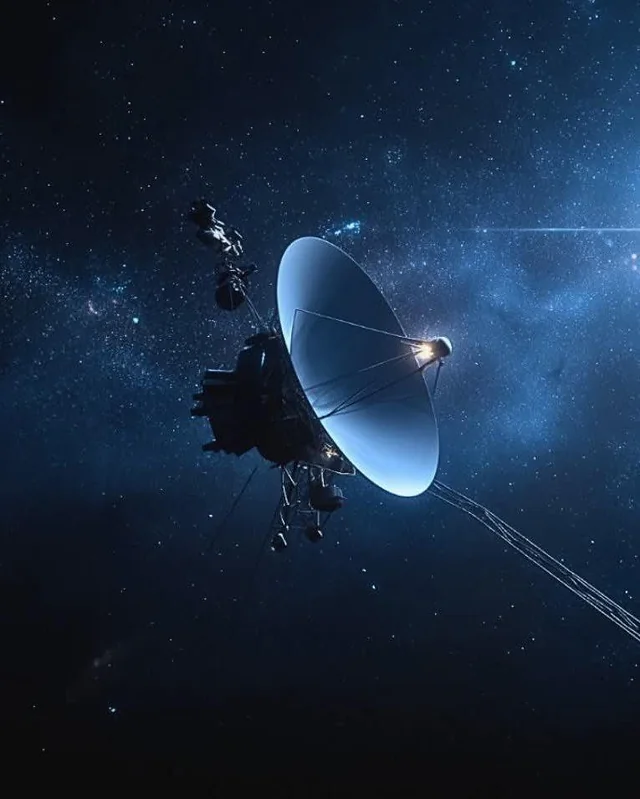
BepiColombo Arrives at Mercury (Orbit Insertion) Countdown
Saturday, November 21, 2026 · Time not confirmed
Mercury orbit

Where to Buy
Affiliate or partner links may earn a commission at no extra cost to you. As an Amazon Associate I earn from qualifying purchases.
Details
- Vehicle or Subject
- BepiColombo
- Organization or Agency
- ESA / JAXA
- Payload or Details
- Mercury Planetary Orbiter (MPO) and Mercury Magnetospheric Orbiter (Mio)
- Destination / Orbit
- Mercury
Release information
Following the arrival sequence, orbit insertion leads into the separation of the science spacecraft in December 2026, with full scientific operations scheduled to begin in April 2027.
After an eight-year journey across the inner Solar System utilizing solar-electric propulsion and multiple gravity assist maneuvers, the mission enters its final phase to establish orbit around the innermost planet. The spacecraft stack launched in October 2018 aboard an Ariane 5 rocket and travelled billions of kilometers to prepare for this complex orbital insertion sequence.
Following the initial entry into orbit, the mission transitions from its cruise configuration into an operational science phase. Primary scientific operations are set to commence in April 2027, featuring dual-spacecraft observations of the surface, interior structure, magnetic field, and magnetosphere.
Mission details
The mission embarked on its journey following a launch aboard an Ariane 5 ECA rocket from the Guiana Space Centre in October 2018. Designed with a total launch mass of 4,100 kilograms, the spacecraft stack made use of solar-electric propulsion, gravity assists, and precise trajectory maneuvers during its multi-year cruise across the inner Solar System. ESA's module was built by Airbus, while JAXA's orbiter was manufactured by ISAS.
Throughout the interplanetary voyage, the science modules were transported in a stacked configuration attached to the Mercury Transfer Module. The combined spacecraft travelled through deep space for eight years, preparing for the complex sequence of operations required to enter orbit around its target destination.
Timeline and orbital sequence
The mission's arrival sequence commenced on 3 September 2026 with the uncoupling of the transfer module from the remaining spacecraft stack. The Mission Control Team at the European Space Operations Centre in Darmstadt, Germany, gave the go-ahead for the operation after verifying system telemetry. Signals confirmed separation via ground antennas in Cebreros, Spain, and Malargüe, Argentina.
Following orbital entry, the two science orbiters are scheduled to decouple from one another on 9 or 10 December 2026. Once separated, each orbiter will maneuver into its distinct science orbit, characterized by a polar inclination of 90 degrees. Primary scientific operations for the mission are scheduled to begin in April 2027 with a planned duration of one year.
The European orbiter will operate in an orbit with a perihermion altitude of 480 kilometers and an apohermion altitude of 1,500 kilometers. In contrast, the Japanese spacecraft will enter a broader elliptical orbit, featuring a perihermion altitude of 590 kilometers and an apohermion altitude of 11,640 kilometers to perform magnetospheric measurements.
Instruments and initial testing
On 15 September 2026, instruments on the European orbiter were powered on together for the first time since transfer module separation. The BELA laser altimeter conducted a 21.5-hour test firing, emitting over 700,000 laser pulses into open space to confirm functional performance. This marked the instrument's first comprehensive test since ground trials back on Earth in 2016.
During the same operational period, the MERTIS spectrometer observed deep space simultaneously through both its planet and calibration ports. The transfer module had previously blocked the planet port throughout the cruise phase. Data analysis of approximately 1 gigabit of returned data revealed no noticeable loss in spectrometer sensitivity compared to ground calibration conducted in 2013.
The optical camera system SIMBIO-SYS also activated its three channels and captured its first image in space during these instrument checkouts. Telemetry confirmed that the camera suite functioned properly, allowing ground teams to proceed with operational fine-tuning ahead of primary scientific mapping.
Latest updates and arrival operations
On 24 September 2026, the European orbiter conducted an 8-minute and 42-second thruster firing to execute its first planned trajectory correction after transfer module separation. Monitored by flight operators at ESOC using the Cebreros antenna, the maneuver delivered an exact velocity adjustment of 11.4 meters per second to align the spacecraft for insertion.
Mission management and project scientists shared spacecraft status updates during press briefings held on 31 August and 9 September 2026 at the Europlanet Science Congress in The Hague. Additional small trajectory correction slots were scheduled leading up to the main orbital insertion sequence to ensure precise targeting.
Frequently asked questions
- When will BepiColombo arrive at Mercury (Orbit Insertion)?
- BepiColombo Arrives at Mercury (Orbit Insertion) on Saturday, November 21, 2026.
- When did the Mercury Transfer Module separate?
- The Mercury Transfer Module separated from the spacecraft stack on 3 September 2026. Signal confirmation was received at ESOC via ground stations in Spain and Argentina.
- When will primary science operations begin?
- Primary science operations are scheduled to begin in April 2027 following the deployment of both orbiters into their respective operational orbits.
- What instruments were tested during the initial arrival checkouts?
- First light checkouts in September 2026 included testing the BELA laser altimeter, the MERTIS spectrometer, and the optical imaging channels of SIMBIO-SYS.
- What launch vehicle was used for the mission?
- The mission was launched on 20 October 2018 aboard an Ariane 5 ECA rocket from the Guiana Space Centre in French Guiana.
Last updated: 11/13/2026