Total Solar Eclipse Countdown
Mon, August 2, 2027 at 1:00 PM UTC
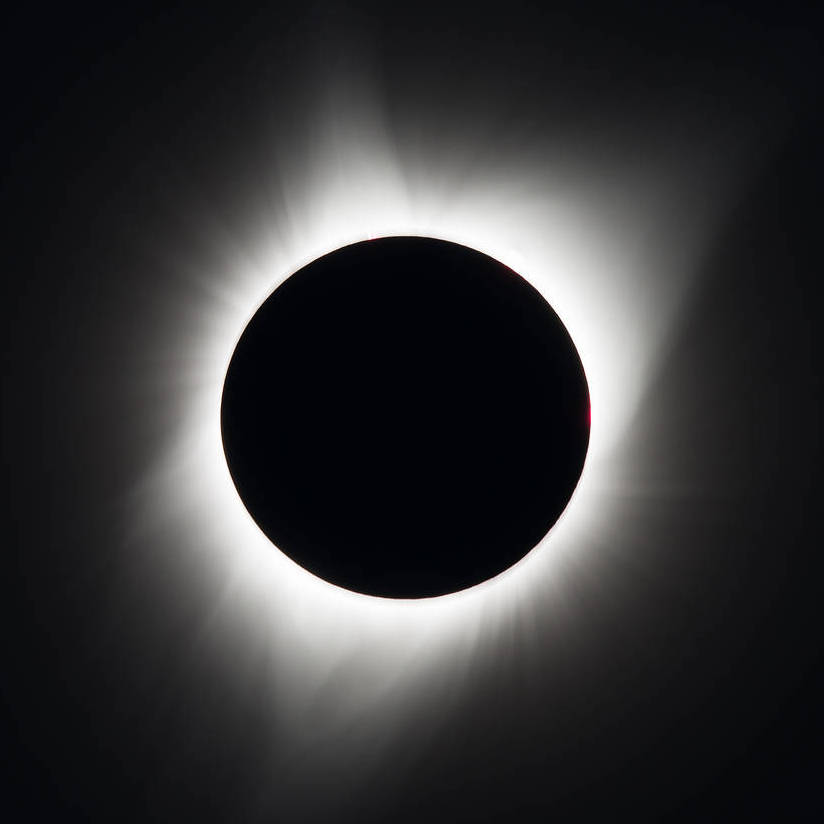
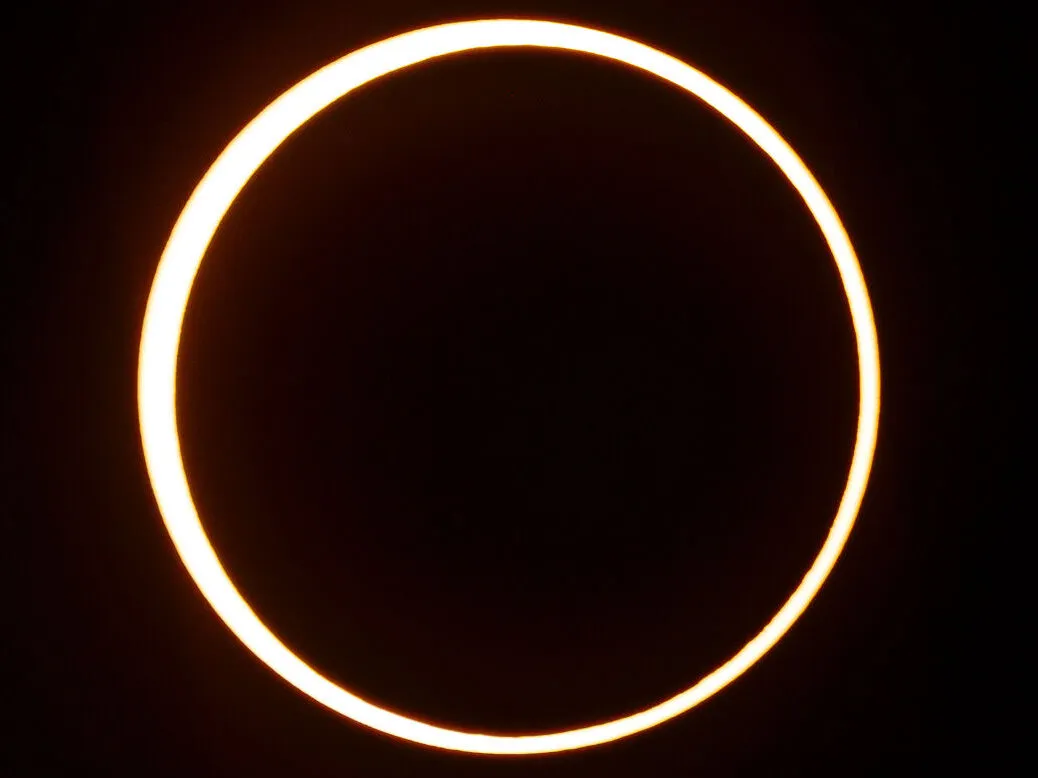
A total solar eclipse is an astronomical event that occurs when the Moon passes directly between Earth and the Sun, completely obscuring the Sun and casting a shadow across Earth. With the Sun's bright disk fully covered, observers within the path of totality can view the solar atmosphere, while surrounding areas experience a partial eclipse.
What we know
A total solar eclipse takes place when the Moon passes directly between Earth and the Sun. This celestial alignment completely blocks the dazzling solar disk and casts a narrow shadow across sections of Earth. Observers situated along the main path experience full coverage, while surrounding areas witness a partial eclipse where the Moon appears to take a bite out of the Sun.
When totality occurs, daylight temporarily turns into darkness. With the primary face of the Sun obscured, observers gain a view of the Sun's wispy outer atmosphere, known as the corona. Stars and planets become visible in the daytime sky as ambient light levels plummet.
The sudden interruption of solar radiation causes noticeable physical and environmental shifts. Air temperatures drop quickly and localized wind activity often changes during the passage of the shadow. Wildlife also reacts to the sudden darkness, with birds and insects frequently exhibiting nighttime behaviors.
Scientific research and observations
Solar eclipses provide scientists with rare opportunities to gather atmospheric and solar data. Astronomical observatories situated within the path use professional survey telescopes to study the structure of the cosmos, dark energy, and solar dynamics. Specialized optical instruments record detailed observations throughout every phase of the lunar transit.
Observatories positioned in areas with low light pollution and minimal cloud cover provide optimal viewing conditions. Researchers often set up additional small telescopes alongside main survey instruments to track the Sun continuously. Continuous telescope feeds capture real time changes in solar radiation and atmospheric clarity.
Historic solar eclipses have enabled scientists to test fundamental scientific theories, including how celestial bodies affect light and gravity. Modern eclipse missions build upon this legacy by studying how sudden darkness influences Earth's upper atmosphere. Furthermore, space agencies study natural eclipses to aid the development of artificial solar eclipses in space.
Atmospheric sounding rocket launches
To collect real time data from the upper atmosphere, agencies such as NASA conduct suborbital sounding rocket launches during eclipses. Facilities like Wallops Flight Facility and White Sands Missile Range host these specialized research operations. These rockets carry scientific instruments directly into the path of the lunar shadow.
Sounding rocket missions are planned around precise launch windows to capture atmospheric changes before, during, and after totality. For instance, suborbital payloads may be scheduled to launch approximately 45 minutes apart during an operational window such as 2:40 to 4:05 p.m. EDT.
In staged research setups, the first rocket launches 40 minutes before peak eclipse. The second payload is launched precisely at peak totality, while the third rocket ascends 40 minutes past peak eclipse. This structured sequence enables scientists to measure atmospheric variations across the entire progression of the event.
Broadcasts and public participation
Space agencies produce live public broadcasts so international viewers can experience total solar eclipses remotely. Programs are made available on agency web channels and platforms such as YouTube. These broadcasts feature live commentary from space scientists, observatory directors, and award winning science communicators.
Livestreams combine direct telescope feeds from multiple observing sites along the path of totality with airborne drone views. Viewers receive real time explanations about solar physics, the Sun's corona, and ongoing space research missions. Presenters also discuss scientific breakthroughs and upcoming space exploration projects.
Public participation is integrated into live eclipse broadcasts through interactive digital campaigns. Viewers can submit questions to space researchers using designated social media hashtags like #AskESA on Bluesky or X. Hosts select questions during the live stream to be answered by featured scientists.
Frequently asked questions
- When is Total Solar Eclipse?
- Total Solar Eclipse will occur on Mon, August 2, 2027 at 1:00 PM UTC.
- How do sounding rockets study a total solar eclipse?
- Research rockets are launched in sequence before, during, and after peak totality to measure upper atmospheric changes caused by the sudden drop in sunlight.
- What natural effects occur during a total solar eclipse?
- As the Moon blocks the solar disk, surface temperatures fall, winds shift, stars become visible, and animals often exhibit nighttime behaviors.
- How can total solar eclipses be watched remotely?
- Space agencies frequently stream continuous telescope feeds and live expert commentary on platforms such as YouTube and Web TV.
- What time does Total Solar Eclipse 2027 release in my timezone?
- The countdown on this page converts Total Solar Eclipse 2027 to your local time automatically, so the clock always reflects your own timezone.
Last updated: 11/14/2026