Ariane 6 Launch: Metop-SGB1 Weather Satellite (VA272) Countdown
Thu, December 17, 2026 at 9:36 PM GMT-3

Where to Buy
Details
- Vehicle or Subject
- Ariane 62
- Organization or Agency
- Arianespace
- Location
- Europe's Spaceport, French Guiana
- Payload or Details
- Metop-SGB1
- Destination / Orbit
- Sun-synchronous orbit
Release information
Liftoff is scheduled for 21:36 local time at the launch site, which corresponds to 01:36 Central European Time. The flight profile will run for roughly one hour and five minutes from liftoff until the satellite separates into its operational polar trajectory at an altitude of approximately 800 kilometers.
Flight VA272 marks the deployment of the second satellite in Europe's EPS-SG polar meteorological series. Jointly overseen by the European Space Agency and EUMETSAT, the mission pairs this spacecraft with an existing sister satellite launched in 2025 to form a coordinated orbital network for advanced climate and weather tracking.
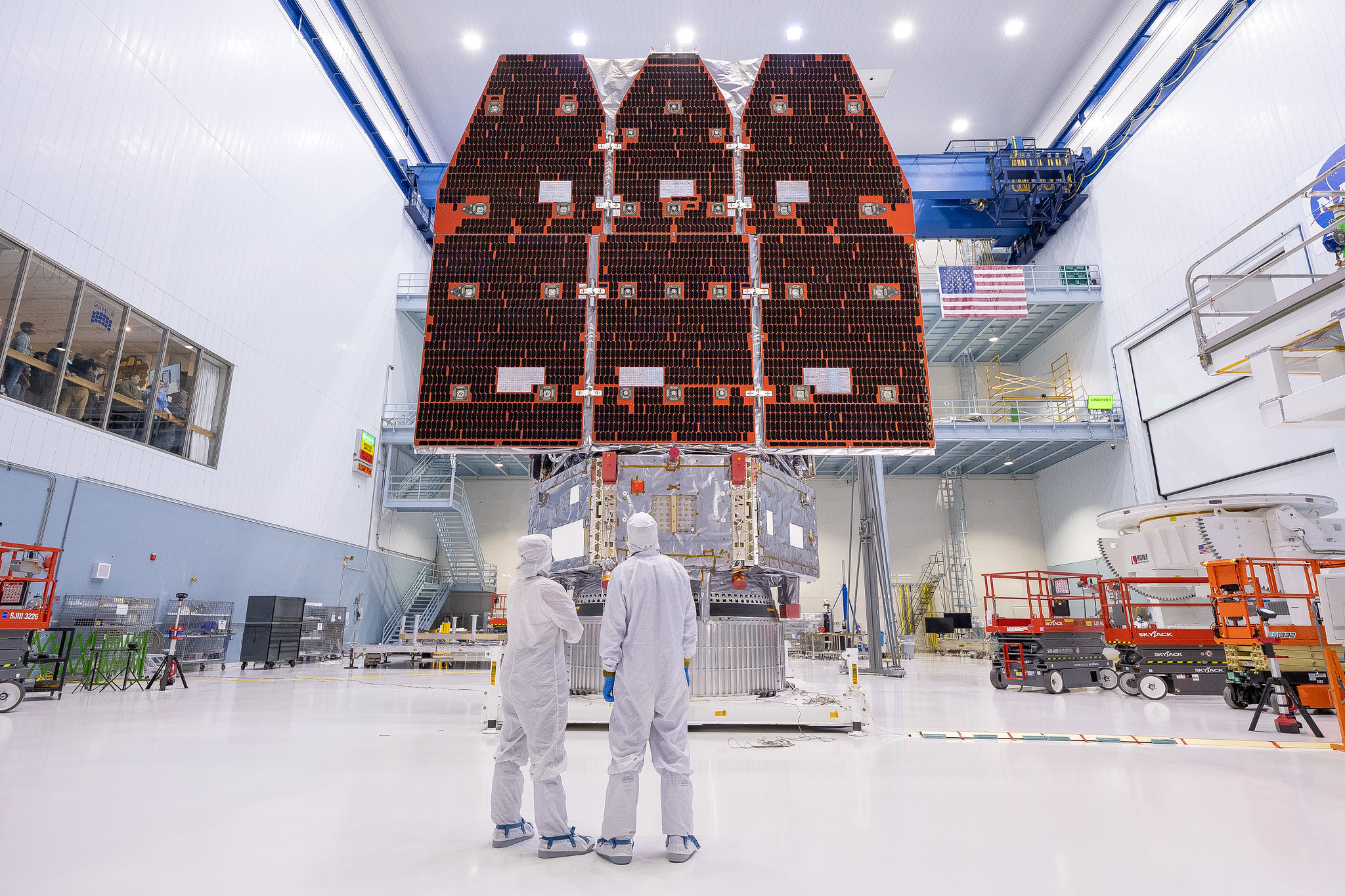
Manufactured by Airbus Defence and Space, the platform carries five advanced sensor suites to track atmospheric humidity, ocean surface winds, rainfall, and cloud properties. Prime contractor ArianeGroup coordinates rocket production across more than 600 industrial suppliers located in 13 European countries.
Mission details
Designated as flight VA272, this flight marks the eleventh operational outing for Europe's modern heavy-lift vehicle family. Built by ArianeGroup under the supervision of the European Space Agency, the launcher relies on an extensive industrial network spanning more than 600 enterprises in 13 countries. The flight represents the commercial launch operator's sixth campaign of the year and its 364th mission overall since commercial operations began.
The flight utilizes the two-booster arrangement of the rocket family, which features a pair of solid rocket boosters attached to the core cryogenic stage. This specific setup accounts for seven of the first eleven flights in the launcher programme. It is also the fourth time the new vehicle architecture has flown toward a polar trajectory rather than equatorial or geostationary transfer orbits.
The spacecraft arrived at the Centre Spatial Guyanais to undergo final processing, fueling, and encapsulation within the payload fairing prior to rollout. Transoceanic transport for major vehicle stages and payloads across the Atlantic is supported by the custom sailship Canopee, designed to cut maritime shipping fuel consumption by up to 30 percent through automated wing sails. Technicians at the space centre conduct checkout protocols to verify telemetry before integration with the booster.
Payload instrumentation and objectives
The mission delivers the second flight unit of the EUMETSAT Polar System Second Generation programme, known as EPS-SG. Constructed by Airbus Defence and Space under contract with the European Space Agency, the spacecraft will be handed over to EUMETSAT for day-to-day operations over its design lifespan. It follows the earlier deployment of the companion A-series platform, which achieved orbit in August 2025.
Five primary scientific instruments are mounted on the satellite bus to gather environmental metrics that complement observations from the first flight unit. Working in tandem, the paired observatories will monitor wind fields, surface rainfall rates, soil moisture profiles, and the density of ice clouds. These synchronized datasets feed into international numerical weather prediction models to improve long-range forecasts and track high-impact severe storms.
Beyond routine weather monitoring, the data gathered will advance long-term climate research and environmental policy planning. Measurements collected from polar altitude support operational activities in hydrology, oceanography, coastal management, and land-surface ecology. The secondary mission parameters also track polar ice coverage and sea ice distribution to quantify shifts in global climate patterns.
Flight profile and timeline
The sequence from ignition on the launch table to spacecraft separation is slated to run for approximately one hour and five minutes. The core stage, powered by the liquid-fueled Vulcain engine alongside the strap-on solid boosters, provides initial thrust before the upper stage takes over for orbital insertion. Flight controllers will monitor ascent parameters from the mission control centre in Kourou throughout the powered phase.
Orbital release is targeted for a polar altitude of roughly 800 kilometers above Earth. Once separation confirms that the satellite has separated cleanly from the upper stage, ground stations will acquire initial radio contact to confirm solar array deployment and power generation. EUMETSAT controllers will then initiate early-orbit commissioning routines to verify the health of onboard avionics and thermal control systems.
Fleet expansion and operational context
Flight VA272 continues a demanding deployment schedule for European orbital infrastructure. The launch closely follows the lofting of the MTG-I2 geostationary weather satellite earlier in the year, as well as multiple commercial and institutional flights covering navigation and Earth observation. Institutional missions carried out by the rocket family have included French defence payloads like CSO-3 and environmental monitoring sentinels like Sentinel-1D.
The mission also reflects the steady industrial ramp-up of the vehicle series following earlier development challenges. Programme engineers previously resolved schedule adjustments linked to reported turbopump testing on the Vulcain 2.1 main engine. With multiple configurations now demonstrated in active service, the launcher serves as Europe's primary route to space for both sovereign governmental payloads and major commercial constellations.
Frequently asked questions
- When is Ariane 6 Launch: Metop-SGB1 Weather Satellite (VA272)?
- Ariane 6 Launch: Metop-SGB1 Weather Satellite (VA272) is scheduled for Thu, December 17, 2026 at 9:36 PM GMT-3.
- Who built the satellite and who will operate it in orbit?
- Airbus Defence and Space constructed the spacecraft under a development contract with the European Space Agency. Once orbital insertion and initial commissioning are complete, EUMETSAT will assume operational control of the platform for its full working lifetime.
- What instruments and observations does this satellite provide?
- The spacecraft carries five scientific instruments that work in coordination with the earlier A-series platform launched in August 2025. Together, they gather high-precision observations of global winds, precipitation, ice cloud structures, soil moisture, and polar sea ice extent.
- How long will the flight take to reach spacecraft separation?
- The VA272 flight profile lasts approximately one hour and five minutes from liftoff to the release of the spacecraft at an altitude of roughly 800 kilometers.
- What time does Ariane 6 Launch: Metop-SGB1 Weather Satellite (VA272) 2026 release in my timezone?
- The countdown on this page converts Ariane 6 Launch: Metop-SGB1 Weather Satellite (VA272) 2026 to your local time automatically, so the clock always reflects your own timezone.
Last updated: 11/25/2026