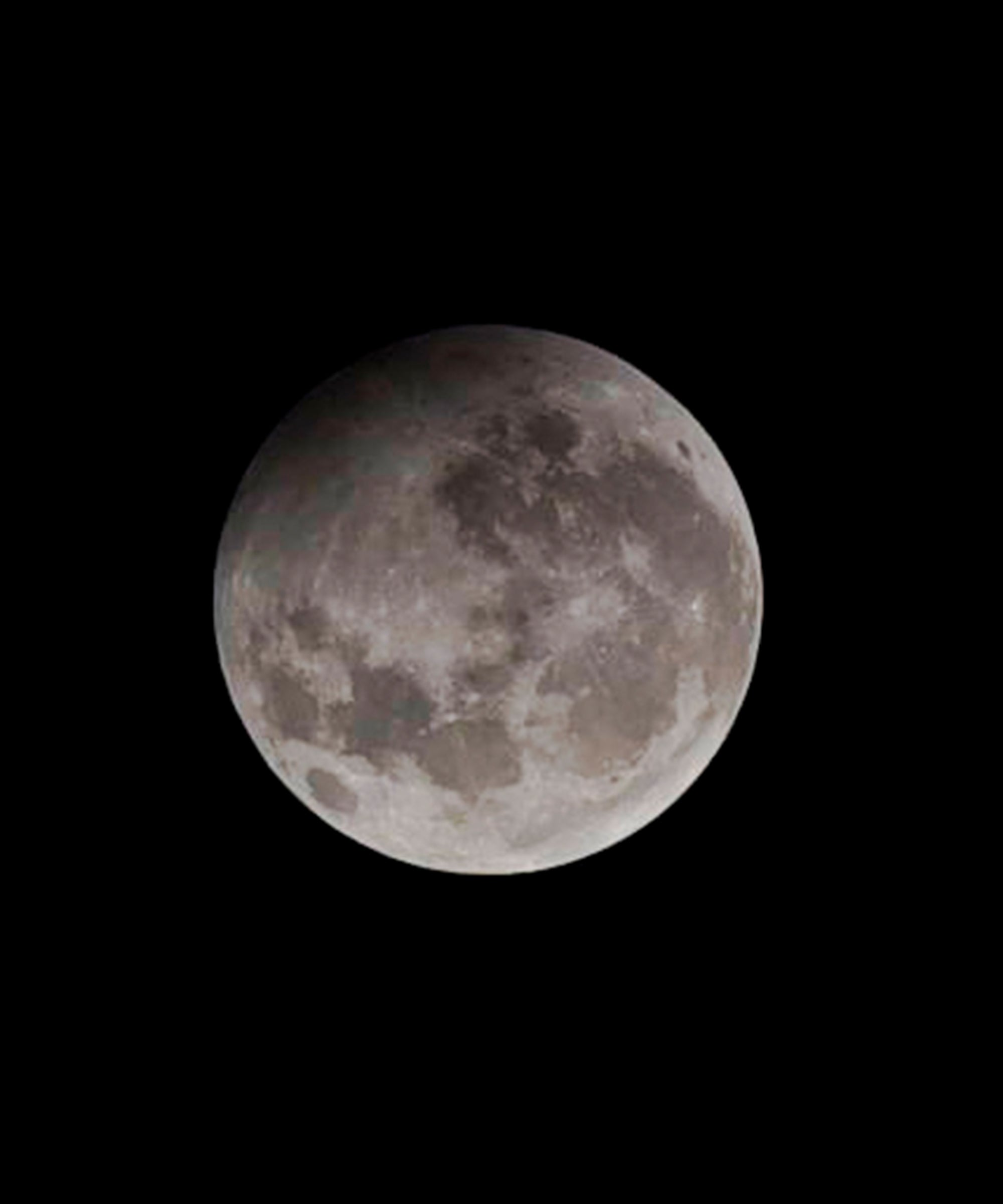
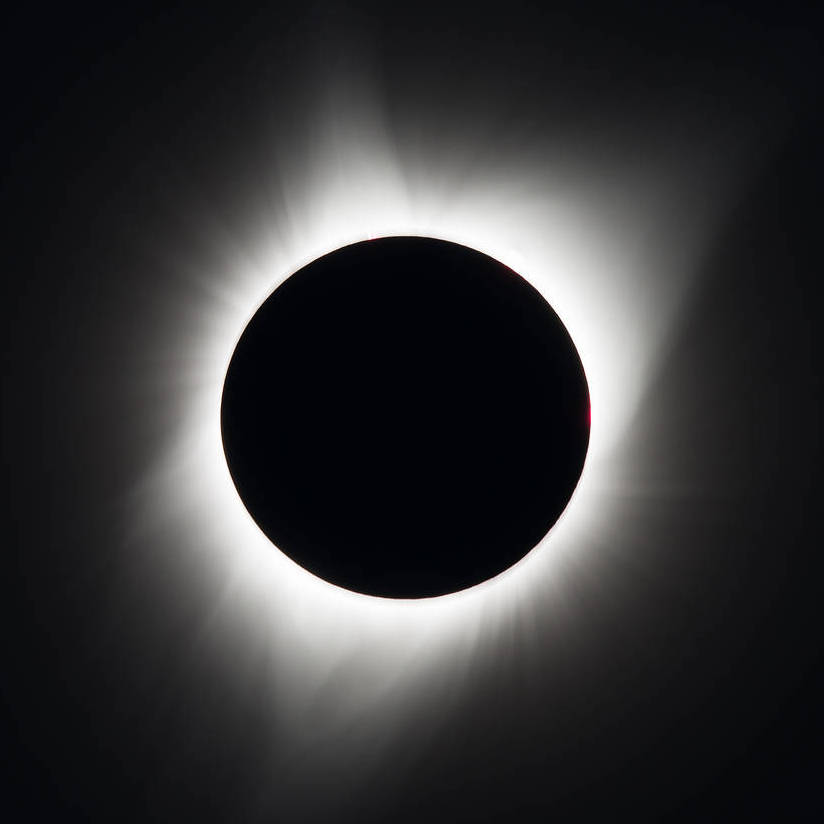
Partial Lunar Eclipse Released
Thu, August 27, 2026 at 11:00 PM CDT
Details
- Location
- Americas, Europe, Africa, Western Asia
Release information
The umbral partial phase begins at 2:34 Universal Time on August 28, 2026 (10:34 p.m. Eastern Time on August 27), reaching maximum eclipse coverage at 4:13 Universal Time.
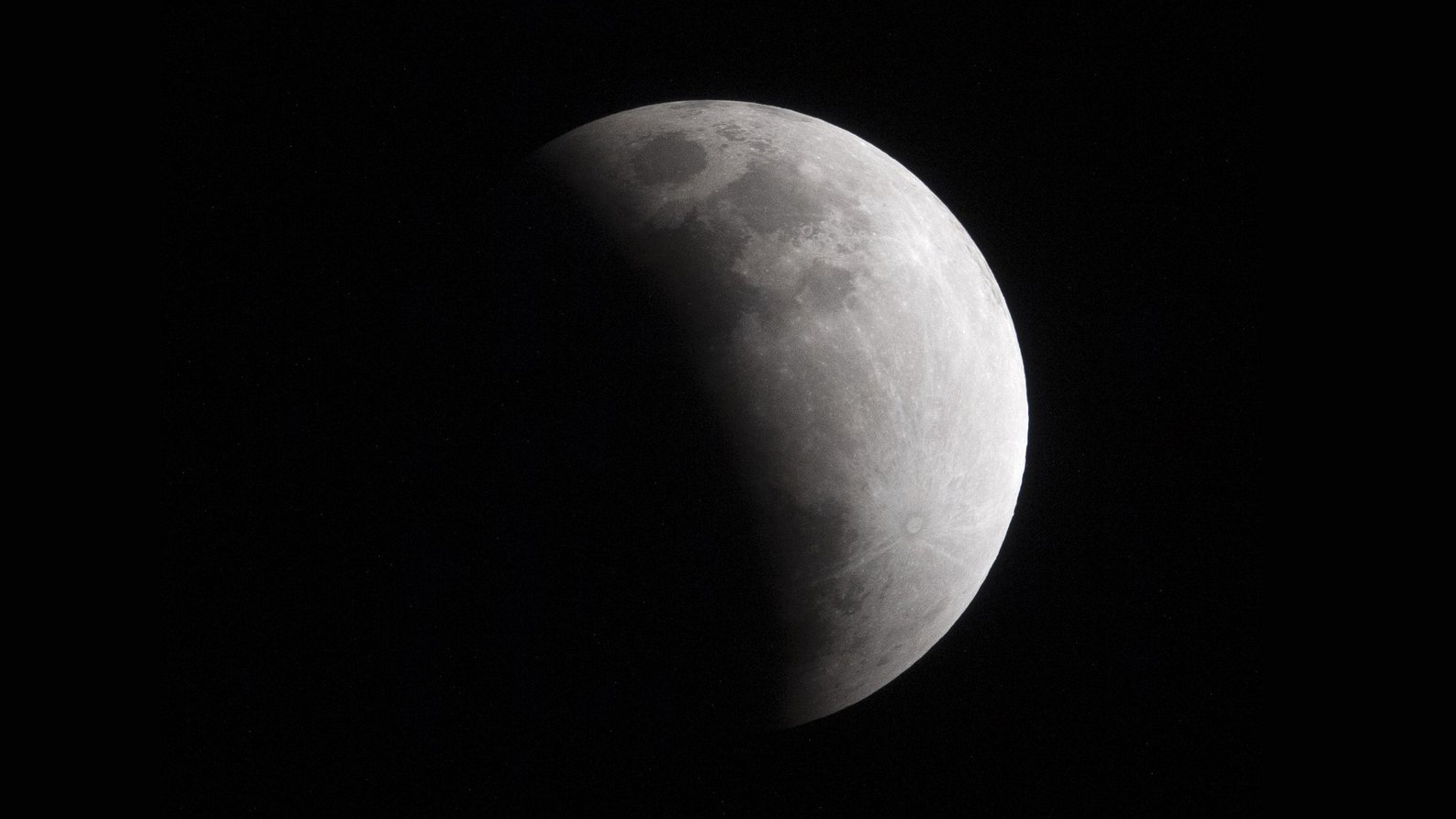
This deep partial lunar eclipse occurs when Earth moves directly between the Sun and the Moon, projecting its shadow across the Moon. At peak coverage, Earth's central umbral shadow covers 96.3 percent of the lunar disk's total surface area. As the partial phase progresses and the sunlit section shrinks, human eyes dark-adapt to reveal a distinct coppery hue across the shadowed portion of the Moon.
Event details
A deep partial lunar eclipse occurs when Earth moves directly between the Sun and the Moon, projecting shadow across the lunar disk. Earth produces two distinct shadow zones during this alignment: the central umbra where solar light is completely blocked, and the outer penumbra where sunlight is partially obscured. The penumbral effect remains relatively subtle to skywatchers before the darker umbra touches the lunar surface.
As the Moon moves into Earth's umbral shadow, the dark notch taking a bite out of the lunar disk becomes easily noticeable. At maximum coverage, 96.3 percent of the Moon's surface area will sit inside the central umbral shadow. Because nearly the entire lunar disk enters the shadow zone, observers will experience an exceptionally deep partial eclipse.
Timing and progression
The main umbral phase of the eclipse begins at 2:34 Universal Time on August 28, 2026, which corresponds to 10:34 p.m. Eastern Time on August 27. When the Moon initially contacts the umbral shadow, Earth's shadow cuts sharply into the full Moon. This marks the transition from faint penumbral dimming to obvious structural shading across the surface.
The peak of the event takes place at 4:13 Universal Time, which marks the moment of maximum surface coverage. Less than an hour after the partial umbral phase begins, the sunlit section of the Moon becomes small enough for human vision to dark adapt. This adaptation allows skywatchers to see the coppery color generated by light passing through Earth's atmosphere into the umbra.
Eclipse magnitude mechanics
Astronomers rely on two separate calculations to define how much of the Moon enters Earth's shadow during an eclipse. Umbral magnitude calculates the fraction of the lunar diameter obscured by the umbra. In contrast, surface obscuration measures the exact percentage of total lunar surface area covered by the umbral shadow.
Diameter magnitude values can exceed 1.0 for total lunar eclipses or fall below zero for penumbral eclipses. Surface obscuration offers a simpler percentage scale between zero and 100 percent. For this event, describing the eclipse as having 96.3 percent area obscuration provides an accurate representation of the visual coverage expected at maximum alignment.
Saros 138 classification
This astronomical event is categorized as a member of Saros 138, a historical family of recurring eclipses. Eclipses within the exact same Saros series repeat every 18 years, 11 days, and 8 hours. This specific period corresponds to geometric cycles where Earth, Moon, and Sun return to nearly identical orbital alignment positions.
Because of the predictable nature of Saros cycles, astronomers can easily trace linked past and future occurrences. The previous lunar eclipse belonging to Saros 138 took place on August 16, 2008. After the August 2026 event concludes, the next lunar eclipse in Saros 138 will occur on September 7, 2044.
Atmospheric color shifts
During partial and total lunar eclipses, sunlight passing through Earth's atmosphere bends toward the dark inner umbral shadow. Atmospheric filtering scatters shorter blue wavelengths while permitting longer red and orange wavelengths to pass through and illuminate the Moon. This optical effect is what gives the dark portion of the lunar surface its distinctive coppery appearance.
The intensity of the coppery tint depends on how small the remaining bright sunlit portion of the Moon is. When only a tiny crescent remains outside the umbra, human eyes adapt quickly to the low ambient light. This adaptation renders the reddish glow on the umbra-covered surface far more visible to observers.
Frequently asked questions
- When is Partial Lunar Eclipse?
- Partial Lunar Eclipse will occur on Thu, August 27, 2026 at 11:00 PM CDT.
- What time does peak coverage occur during the eclipse?
- Greatest eclipse occurs at 4:13 Universal Time on August 28, 2026, representing the point of maximum alignment when 96.3 percent of the Moon's surface area is covered by the umbra.
- What is the difference between eclipse magnitude and area obscuration?
- Umbral magnitude calculates the fraction of the Moon's diameter covered by Earth's umbra, while area obscuration measures the percentage of total surface area covered by the shadow.
- What Saros series does this lunar eclipse belong to?
- This event belongs to Saros 138. Eclipses in this series repeat every 18 years, 11 days, and 8 hours. The previous eclipse in Saros 138 occurred on August 16, 2008, and the next will occur on September 7, 2044.
- What time does Partial Lunar Eclipse 2026 release in my timezone?
- The countdown on this page converts Partial Lunar Eclipse 2026 to your local time automatically, so the clock always reflects your own timezone.
Last updated: 11/14/2026